
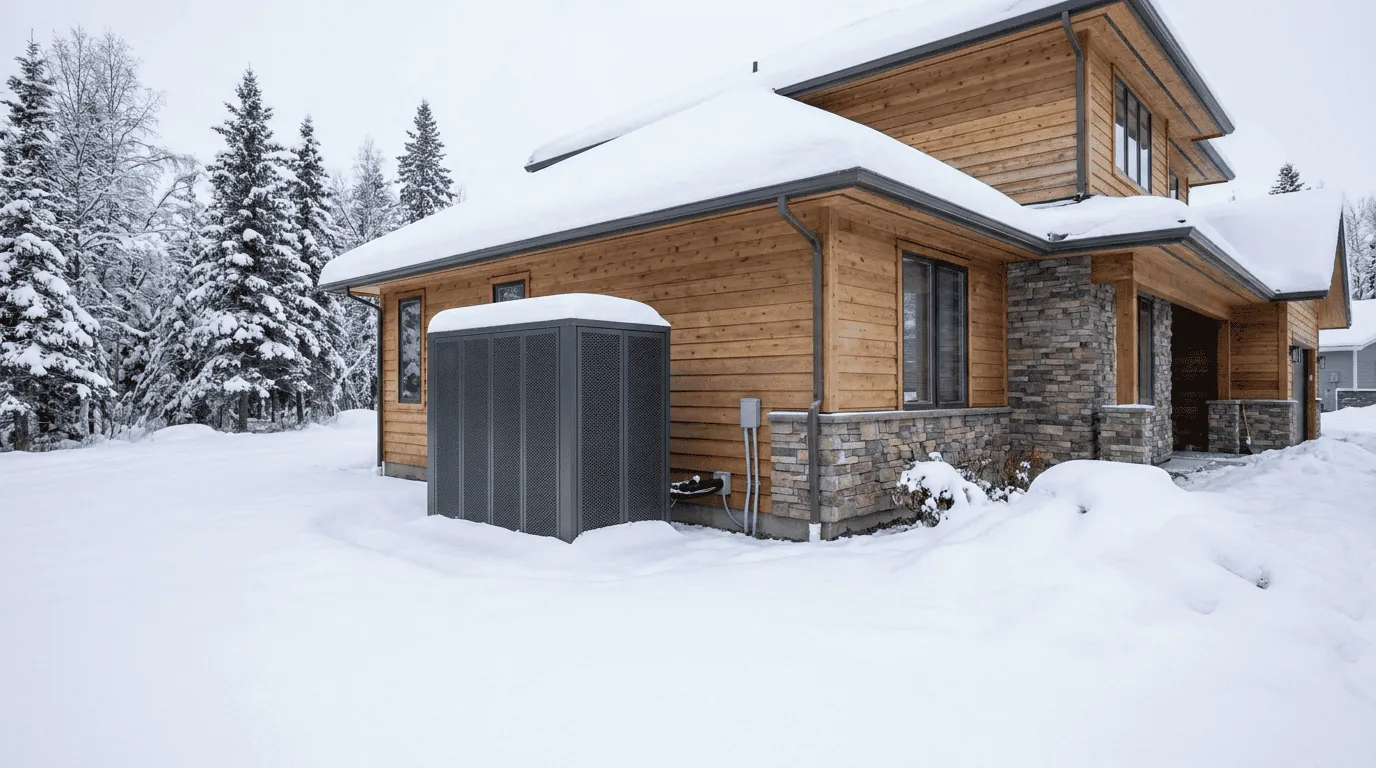
At a glance
- What it is
- A permanently installed generator that starts automatically when utility power fails
- Usually paired with
- An automatic transfer switch (required transfer equipment prevents backfeed)
- Common fuels locally
- Natural gas where Enstar service exists; propane elsewhere
- Permit
- Generally required inside the Building Safety Service Area — verify for your address
Why backup power matters in Anchorage
Outages in Southcentral Alaska are often weather-driven. In January 2025, a windstorm with gusts reported above 100 mph left a peak of roughly 17,500 Chugach Electric members without power, and some Hillside and East Anchorage neighborhoods were still waiting for restoration days later. Similar, smaller wind events have hit the Hillside and East Anchorage in other years.
What makes an outage serious here is heat. Natural gas is the most common heating fuel in the Railbelt, but a gas furnace still needs electricity for its blower, igniter and controls, and a hydronic boiler needs power for circulation pumps. When the grid goes down in January, a home can lose heat even though the gas line is fine. That is the main reason Anchorage homeowners look at standby generators rather than relying on extension cords and a portable unit.
View as table
| Item | Peak without power | Note |
|---|---|---|
| April 2018 | ~7,600 | Chugach outage map peak |
| February 2024 | ~5,900 | Peak, Chugach members |
| January 2025 | ~17,500 | Peak, Chugach members; gusts above 100 mph |
Sources: Anchorage Daily News — 2025, 2024, 2018. Utility-reported peaks; not strictly comparable.
What a standby installation involves
A standby generator is a permanently mounted engine-generator in a weather enclosure, connected to your home’s wiring through transfer equipment and to a fixed fuel supply. When utility power fails, the transfer switch senses the loss, the generator starts, and the switch moves your selected circuits — or the whole house — onto generator power. When utility power returns, the process reverses.
- Site and pad: a level, stable base at the location the manufacturer and code allow, with clearances to windows, doors, vents and property lines.
- Fuel connection: a natural gas or propane line sized for the generator’s full-load demand. Gas piping is a separate trade and may need its own permit.
- Transfer equipment: usually an automatic transfer switch (ATS) rated for your service, sometimes with load-management modules. See our transfer switch page.
- Wiring and controls: conductors between the generator and transfer switch, control wiring, and any required disconnects and labeling.
- Startup and inspection: commissioning to the manufacturer’s procedure, then municipal inspection where required.
Whole-home or partial-home backup?
A whole-home system powers every circuit, which requires a generator large enough for everything that might run at once — or load-management equipment that sheds big loads such as ranges, dryers or EV chargers when needed. A partial-home (“essential circuits”) system powers a selected subpanel: typically the furnace or boiler, refrigerator and freezer, well pump if you have one, some lighting and outlets, internet equipment, and any heat-trace circuits that protect plumbing.
| Approach | What runs | Trade-offs |
|---|---|---|
| Whole-home | Every circuit available | Larger generator or load management; higher fuel use |
| Essential circuits | Heat, refrigeration, water, key lights | Smaller unit; you choose circuits in advance |
| Portable + inlet | Selected circuits, manual start | Lowest cost; requires someone home to run it — see the planning guide |
Sizing: what an installer should calculate
Generator size should come from a load calculation, not a guess. A qualified installer looks at the running and starting (surge) demand of the loads you want covered. Motors — well pumps, furnace blowers, boiler circulators, sump pumps, compressors — draw several times their running current for a moment at startup, and the generator has to handle that without the voltage sagging.
Expect questions about your heating system, whether you have a well (common on the upper Hillside, where many lots are outside the municipal water service area), electric water heating, garage or driveway heating, and plans for an EV charger or heat pump. Undersizing leads to nuisance shutdowns; oversizing costs more up front and in fuel.
Fuel and cold-weather considerations
Where natural gas service is available, many homeowners prefer it because there is no tank to refill during a long outage. Propane is the usual alternative where gas lines do not reach; tank size, placement, and vaporization in very cold weather are worth discussing with the propane supplier and installer. Diesel units exist but are less common for residential standby use.
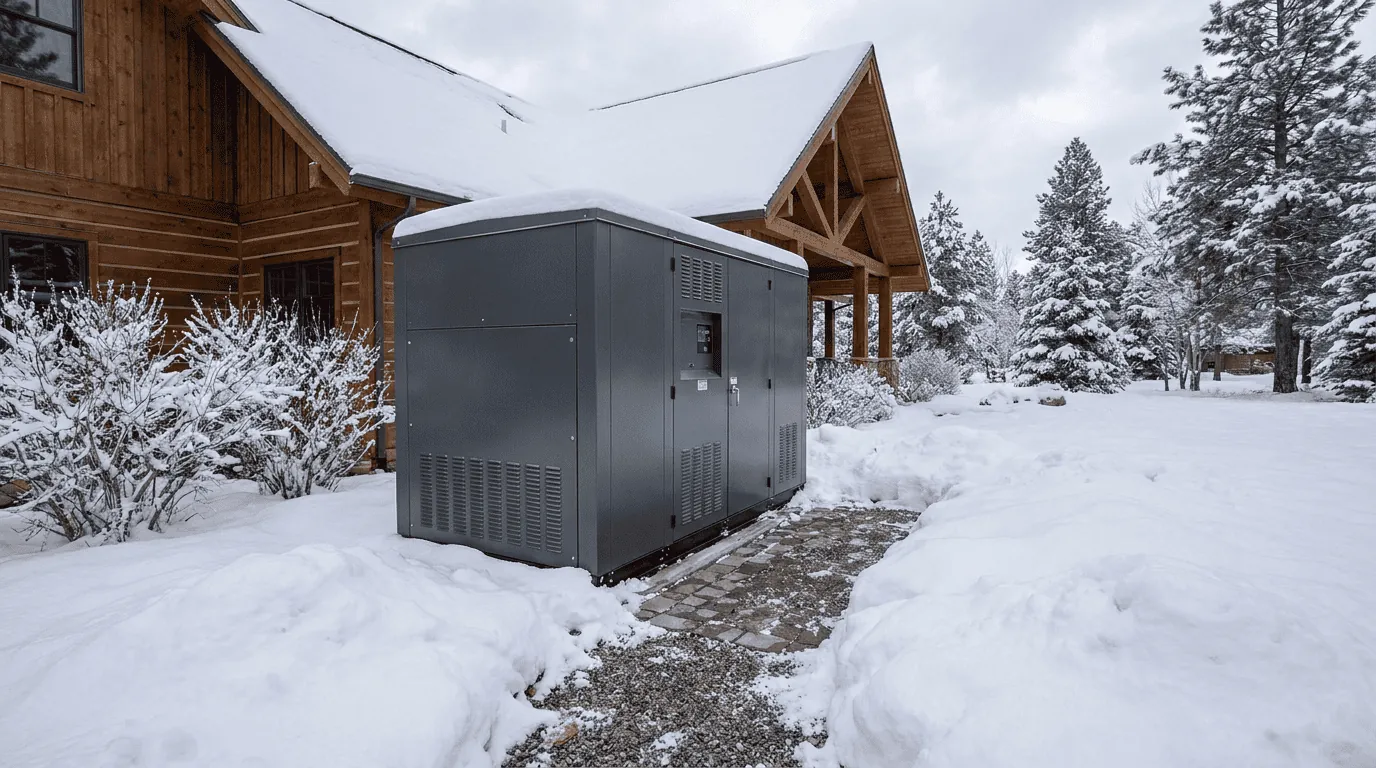
Anchorage’s 1991–2020 climate normals put the average January low around 11°F, and the airport records roughly 75 inches of snow in a typical winter. Ask how the proposed unit is rated for cold starts (battery warmers and oil choice matter), how snow load and drifting will be handled at the chosen location, and how the exhaust and air intake will be kept clear when snow piles up.
Permits and code points
In the Anchorage Bowl this work generally needs an electrical permit and inspection under the 2026 code update (2023 NEC with local amendments). Eagle River and Chugiak have historically been handled differently — confirm for your address. Details: Anchorage permits guide.
The National Electrical Code covers optional standby systems in Article 702, including the requirement that transfer equipment prevent inadvertent interconnection with the utility. Recent NEC editions also added emergency shutdown requirements for certain generators and outdoor emergency disconnect requirements for one- and two-family dwellings. Exactly which provisions apply in Anchorage depends on the adopted edition and local amendments — your installer should be able to explain them.
Maintenance after installation
Standby generators run short, automatic exercise cycles and need periodic service: oil and filter changes, battery checks, and inspection of the enclosure and air intake. Follow the manufacturer’s schedule, which is usually based on hours of operation and time. Before winter, clear access to the unit and confirm it is set to automatic.
Questions to ask an installer
- Are you a registered Alaska electrical contractor with a named electrical administrator, and are you licensed with the Municipality? (See our licensing guide.)
- Will you pull the electrical permit, and who handles the gas piping permit?
- Can I see the load calculation used to size this generator?
- Which circuits will be backed up, and how will large loads be managed?
- Where will the unit sit, and what clearances apply to my house and lot?
- How is the unit protected for cold starts and snow?
- What is covered by the manufacturer’s warranty versus your workmanship warranty?
- Who services it, and what does a maintenance visit include?
Frequently asked questions
How much does a standby generator cost to install in Anchorage?
We do not publish price figures because installed cost varies widely and we cannot verify current local pricing. What drives the number is predictable, though, and knowing it helps you compare quotes fairly:
- Generator size — a unit sized for essential circuits costs much less than one sized for the whole house.
- Transfer equipment — a service-rated automatic transfer switch, load-management modules or a separate critical-load subpanel all add cost.
- Fuel connection — distance from the gas meter or propane tank, whether the meter has enough capacity, and gas-piping permit work.
- Site work — pad preparation, trenching, distance from the panel, and snow and drift protection.
- Permits and inspections, plus shipping lead time for equipment to Alaska.
Ask every installer to itemize these lines so quotes are comparable.
Will a standby generator keep my gas furnace or boiler running during an outage?
Yes, as long as the heating circuit is connected to the generator — and for most Anchorage homes this is the single most important reason to install one. Natural gas is the most common heating fuel in the Railbelt, but a forced-air furnace still needs electricity for its blower, igniter and control board, and a hydronic boiler needs power for its circulation pumps, zone valves and controls. When the grid fails in January, the gas line keeps working but the heating system does not.
Make sure the installer explicitly includes the furnace or boiler circuit, the thermostat and any zone controls, and — if you have them — in-floor heat pumps and heat-trace circuits that protect plumbing. Some furnaces with electronically commutated motors are sensitive to power quality, so ask whether the proposed generator is compatible with your heating equipment.
What size generator does a typical Anchorage home need?
There is no single “typical” size, which is why a load calculation matters more than a rule of thumb. The installer adds up the running load of everything you want backed up and checks the largest starting (surge) loads — motors such as well pumps, furnace blowers, boiler circulators, sump pumps and refrigerator compressors briefly draw several times their running current when they start.
For a gas-heated home that only needs heat, refrigeration, lights and internet, an essential-circuits system can be fairly modest. Homes with private wells (common on the upper Hillside and in Eagle River and Chugiak), electric water heaters, heat pumps or EV chargers need more capacity or load management. Bring a list of your critical appliances and their nameplate ratings to the first conversation; it shortens the process and makes quotes comparable.
Natural gas or propane — which fuel is better for a generator in Anchorage?
Where Enstar natural gas service is available, many homeowners prefer it because the fuel supply does not run out during a long outage and there is no tank to refill or keep clear of snow. The installer must confirm that your gas meter and piping can supply the generator at full load on top of your furnace, water heater and range; sometimes the utility needs to upsize the meter.
Propane is the usual choice where gas lines do not reach. Plan the tank size around a multi-day outage, ask the propane supplier about tank placement and delivery access in winter, and discuss vaporization in very cold weather, which can limit how much fuel a small tank can deliver. Either way, the generator and fuel piping have their own permit and inspection requirements.
Do standby generators start reliably in an Anchorage winter?
Residential standby generators are sold for cold climates, and they run short automatic exercise cycles so problems show up before an outage. Reliability in sustained cold depends on the model and options: battery warmers, oil-pan or block heaters, the correct cold-weather oil, and the manufacturer’s low-temperature rating all matter. Anchorage’s average January low is around 11°F, and colder spells are common.
Snow is the other factor. The enclosure’s air intake and exhaust must stay clear, so placement should avoid roof-shedding zones and places where plowed or drifting snow piles up. Before winter, clear access, check the battery and confirm the controller is set to automatic. Ask installers what maintenance they offer and how they handle a generator that fails to start during a storm.
What information should I have ready before requesting generator quotes?
- Your heating system type (furnace, boiler, in-floor, heat pump) and whether you have a well, sump pump or heat trace.
- Your electrical service size (often printed on the main breaker, for example 100 A or 200 A).
- Whether you have natural gas service or would need propane.
- Where you would prefer the unit to sit, and any snow-shedding or access issues there.
- Whether you want whole-home backup or only essential circuits.
Sources (8)
- Anchorage Daily News — Power outages extend to third day after January 2025 storm (opens in a new tab)
- Alaska Public Media — Anchorage cleans up after January 2025 winds (opens in a new tab)
- Alaska Energy Authority — Railbelt and Southeast residential energy end-use study summary (2012) (opens in a new tab)
- NOAA NCEI — U.S. Climate Normals (1991–2020), Anchorage Ted Stevens Intl. Airport station (opens in a new tab)
- Municipality of Anchorage — press release on the 2026 building code update (AO 2026-33) (opens in a new tab)
- Anchorage Municipal Code Chapter 23.30 — Local Amendments to the National Electrical Code (opens in a new tab)
- AWWU — Water and sewer service on Anchorage’s Hillside (opens in a new tab)
- U.S. Consumer Product Safety Commission — Portable generator safety (opens in a new tab)