
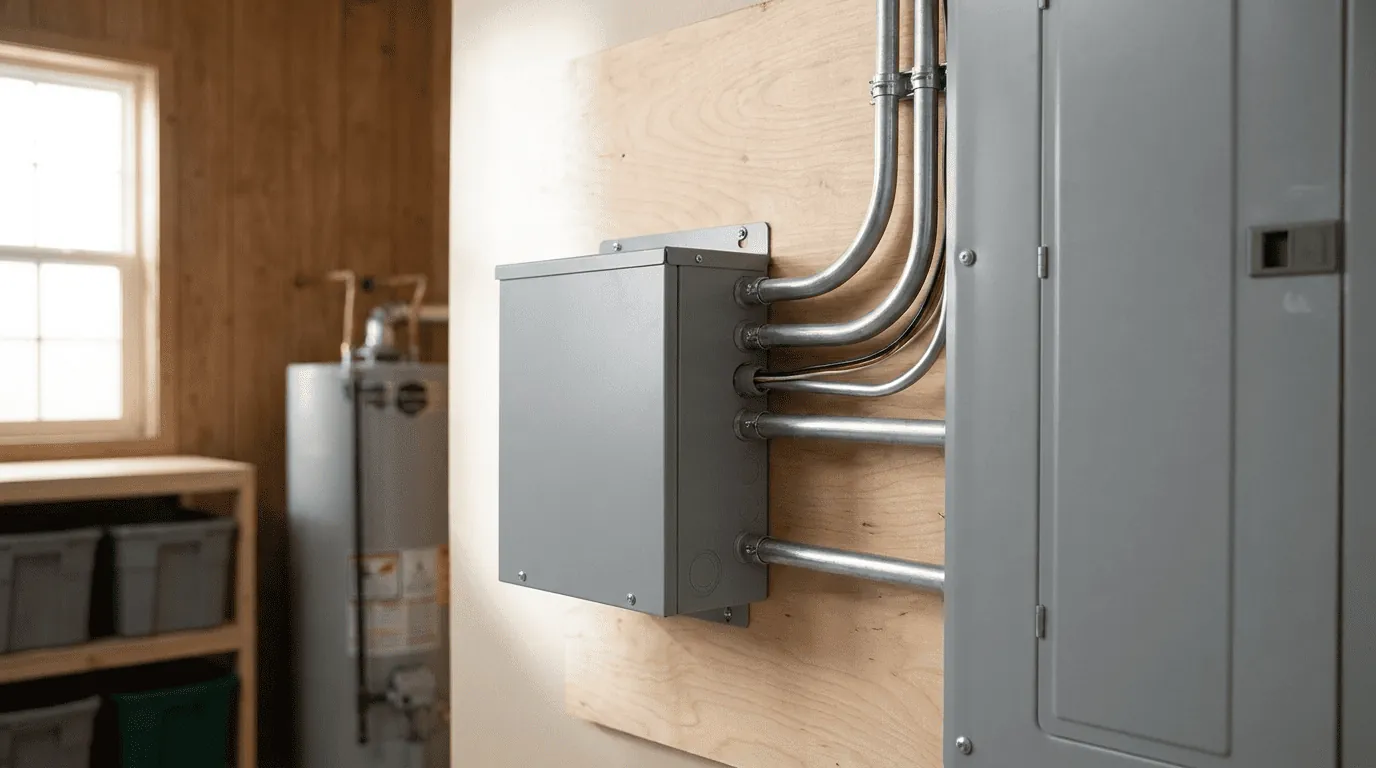
Why transfer equipment is required
If a generator feeds a home’s wiring while the main breaker is still connected to the utility, power can flow backward through the service transformer and onto lines that crews believe are dead. That backfeed can kill a line worker and can also damage the generator when utility power returns. Plugging a generator into a wall outlet with a double-ended cord — sometimes called a “suicide cord” — creates exactly this hazard.
For that reason, the National Electrical Code requires transfer equipment for standby systems that are connected to premises wiring, designed to prevent inadvertent interconnection of the two sources. In Anchorage, both Chugach Electric and Matanuska Electric Association serve residential members, and crews from either utility can be working during a storm restoration.
Types of transfer equipment
Automatic transfer switch (ATS)
Paired with a standby generator, an ATS senses an outage, signals the generator to start, and transfers load once the generator is stable. It is the right choice when nobody may be home — for example, if a long outage during a trip could freeze plumbing. Service-rated ATS units can be installed ahead of the main panel to back up the whole house.
Manual transfer switch
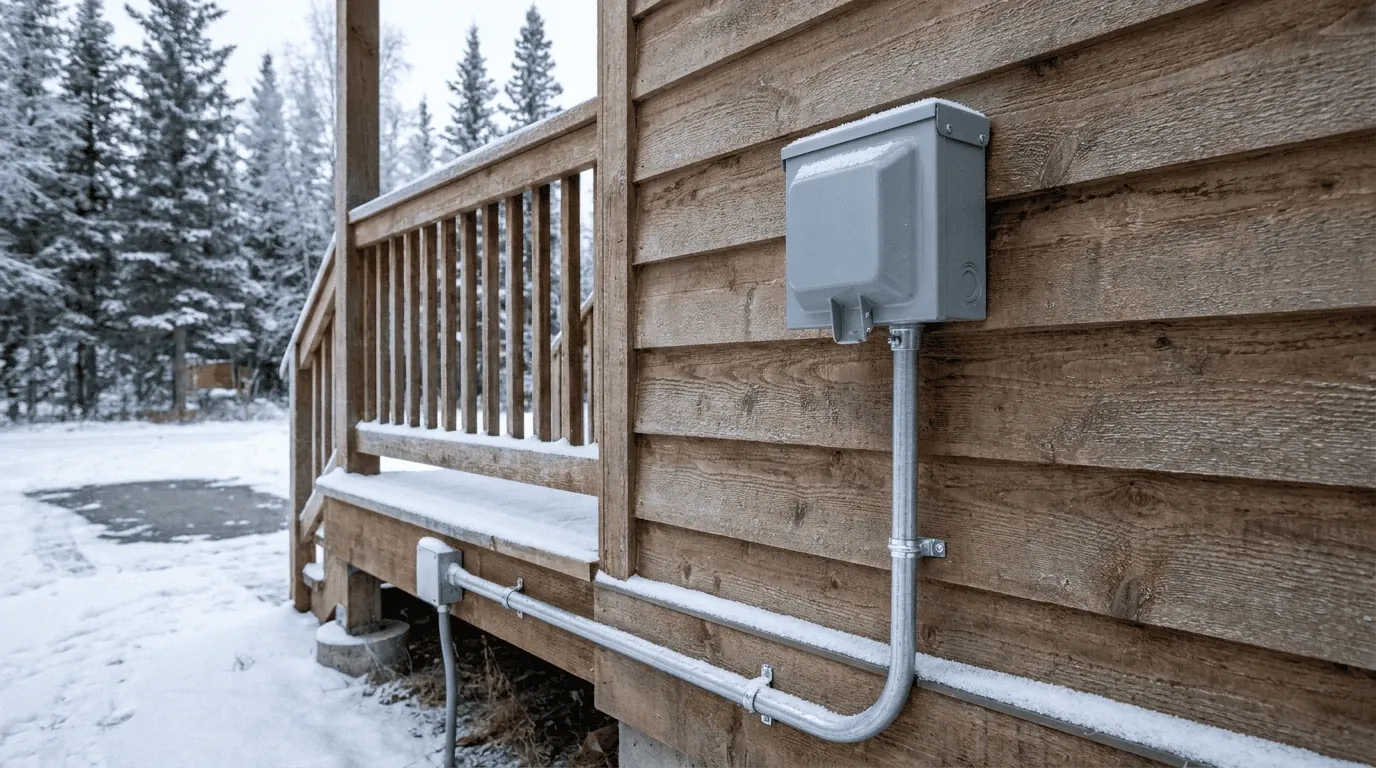
A manual switch or small transfer panel lets you move selected circuits to generator power by hand. It is commonly paired with a portable generator and a weather-resistant power inlet on the outside wall. It costs less but requires someone at home to start the generator and operate the switch.
Breaker interlock kit
An interlock is a listed mechanical device installed on the main panel that makes it physically impossible to have the main breaker and a generator back-feed breaker on at the same time. Whether a particular interlock is acceptable depends on its listing for your specific panel and on local inspection practice — ask before you buy one.
| Option | Typical use | Main trade-off |
|---|---|---|
| Automatic transfer switch | Standby generators; homes left empty in winter | Hands-off; higher cost |
| Manual transfer switch / panel | Portable generator, selected circuits | Someone must be home to operate |
| Listed panel interlock | Portable generator, flexible circuit choice | Must be listed for the exact panel; manual load management |
Choosing which loads to back up
Most partial-home setups move a handful of essential circuits to a dedicated subpanel. In Anchorage, the usual list starts with the heating appliance (furnace, boiler, or the controls and pumps for in-floor heat), refrigeration, a well pump if the home is on a private well, a sump pump if present, some lighting, internet equipment, and any heat-trace or heat-tape circuits that protect water lines.
Write the list down before you talk to installers, and include each appliance’s nameplate rating if you can. It makes quotes easier to compare and helps the installer size both the switch and the generator correctly.
Panel compatibility
Some older panels have no room for additional breakers, use breaker types that are no longer manufactured, or do not have a listed interlock available. In those cases an installer may recommend a separate critical-load subpanel, a service-rated transfer switch, or replacing the panel. If you are already considering a panel upgrade, it often makes sense to plan the generator connection at the same time.
Permits and inspection
In the Anchorage Bowl this work generally needs an electrical permit and inspection under the 2026 code update (2023 NEC with local amendments). Eagle River and Chugiak have historically been handled differently — confirm for your address. Details: Anchorage permits guide.
Questions to ask before you hire
- Is the transfer equipment listed for this use and for my panel?
- Will the switch transfer the whole house or a critical-load subpanel?
- Which circuits are included, and why?
- How is the neutral handled for this generator and switch combination?
- Will you pull the permit and be present for inspection?
- If I use a portable generator, where should the inlet go so the generator can run safely outdoors?
Frequently asked questions
Is a transfer switch required if I use a portable generator?
If the portable generator will power any circuits through your home’s wiring, approved transfer equipment is needed so the generator and the utility can never be connected at the same time. Without it, generator power can flow backward through the service transformer onto lines that Chugach Electric or Matanuska Electric Association crews believe are dead — a lethal hazard during storm restoration — and the generator can be damaged when utility power returns.
If you only run appliances with heavy-duty extension cords plugged directly into the generator, no transfer switch is involved. In that case the cords must be rated for the load, and the generator must stay outdoors, well away from doors, windows and vents. Never use a “double-male” cord to back-feed a wall outlet.
Automatic or manual transfer switch — which one should I choose?
An automatic transfer switch (ATS) is paired with a standby generator. It senses the outage, starts the generator and moves the load without anyone at home — the right choice if the house may be empty during a winter outage and frozen pipes are a risk. A manual switch or small transfer panel is usually paired with a portable generator and an outdoor power inlet; someone has to start the generator and throw the switch, but the equipment costs much less.
A listed breaker interlock is a third option for portable generators: a mechanical plate on the main panel that prevents the main breaker and the generator breaker from being on together. It must be listed for your exact panel model. Your choice mostly comes down to whether someone will reliably be home and able to run a portable generator in snow.
How much does transfer switch installation cost in Anchorage?
We do not publish prices, but the cost drivers are clear. A listed interlock with an outdoor inlet is usually the least expensive option; a manual transfer panel that moves several circuits costs more; a service-rated automatic transfer switch for a standby generator costs the most. Other factors include the distance between the panel and the inlet or generator, whether your existing panel has space and a compatible interlock, whether a separate critical-load subpanel is needed, and permit and inspection fees.
Ask for an itemized quote that names the exact transfer equipment and the circuits it will cover.
Which circuits should I put on the transfer switch?
Start with whatever keeps the house safe and habitable in a multi-day January outage. For most Anchorage homes that means the heating appliance (furnace, boiler, or the pumps and controls for in-floor heat), refrigerator and freezer, the well pump if you have one, a sump pump, some lighting, internet equipment, and any heat-trace or heat-tape circuits that protect water lines.
Then check the total against the generator: large loads such as electric ranges, dryers, electric water heaters and EV chargers are often left off or handled with load management. Write the list down with nameplate ratings before the installer visits; it makes it much easier to size both the switch and the generator correctly.
Does a transfer switch installation need a permit and inspection?
Connecting a generator to premises wiring is electrical work that generally requires a permit and inspection inside the Municipality of Anchorage’s Building Safety Service Area. Inspectors check that the transfer equipment is listed for the application, correctly sized, properly grounded and labeled. Eagle River and Chugiak have historically been outside municipal residential inspections, but state rules on who may perform the work still apply.
Ask the contractor to obtain the permit and to be present for the inspection. Our Anchorage electrical permits guide explains the process.
Sources (6)
- Municipality of Anchorage — press release on the 2026 building code update (AO 2026-33) (opens in a new tab)
- Anchorage Municipal Code Chapter 23.30 — Local Amendments to the National Electrical Code (opens in a new tab)
- Municipality of Anchorage — Resident utilities (opens in a new tab)
- Chugach Electric — North District (former ML&P service area) (opens in a new tab)
- U.S. Consumer Product Safety Commission — Portable generator safety (opens in a new tab)
- NFPA 70, National Electrical Code (free read-only access) (opens in a new tab)