
Types of wiring projects
New circuits
Dedicated circuits for kitchen appliances, a home office, a garage workshop, a heat pump, a hot tub or an EV charger. Each needs panel space and enough service capacity.
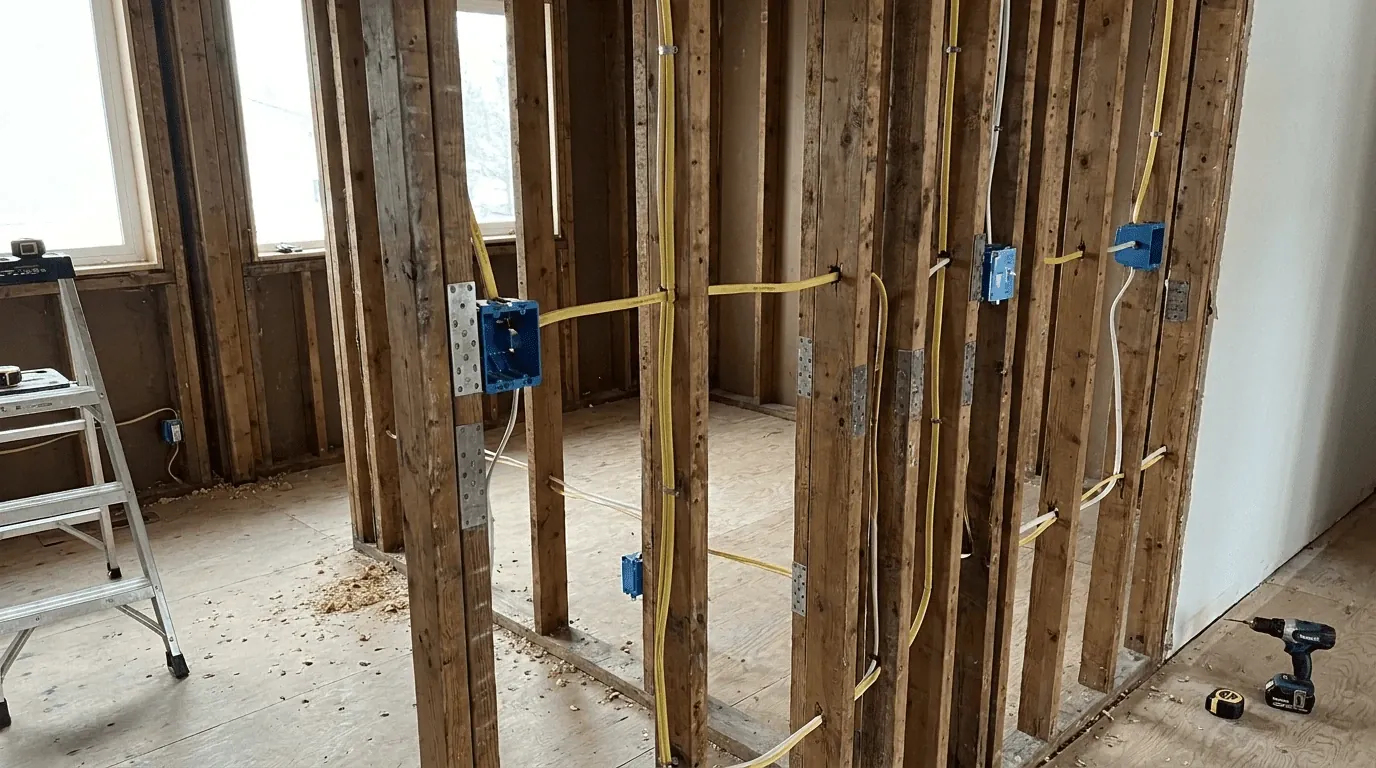
Renovation and addition wiring
Kitchen and bathroom remodels, basement finishes and additions must meet the current code for the work being done — which commonly means GFCI and AFCI protection, tamper-resistant receptacles, and receptacle spacing rules that older homes never had. Anchorage has historically amended some NEC arc-fault provisions locally, so your electrician should explain what applies to your project.
Repairing damaged wiring
Rodents, water leaks, ice dams, earlier DIY work, and accidental nail or screw strikes during renovations are common causes. Damage is usually repaired by replacing the affected cable run, not by burying splices in walls.
Partial or whole-house rewiring
Full rewiring is uncommon and disruptive. It is usually driven by obsolete or damaged wiring, extensive renovation, or an inspection finding. Partial rewiring of specific circuits is much more common.
Older homes in Anchorage
Anchorage’s housing is relatively young by national standards. State labor economists have reported that more than half of the city’s homes were built during the 1970s and 1980s, with only a small share predating 1950. The oldest concentrations are in the original neighborhoods near downtown — the South Addition, Government Hill, Fairview and Bootleggers Cove.
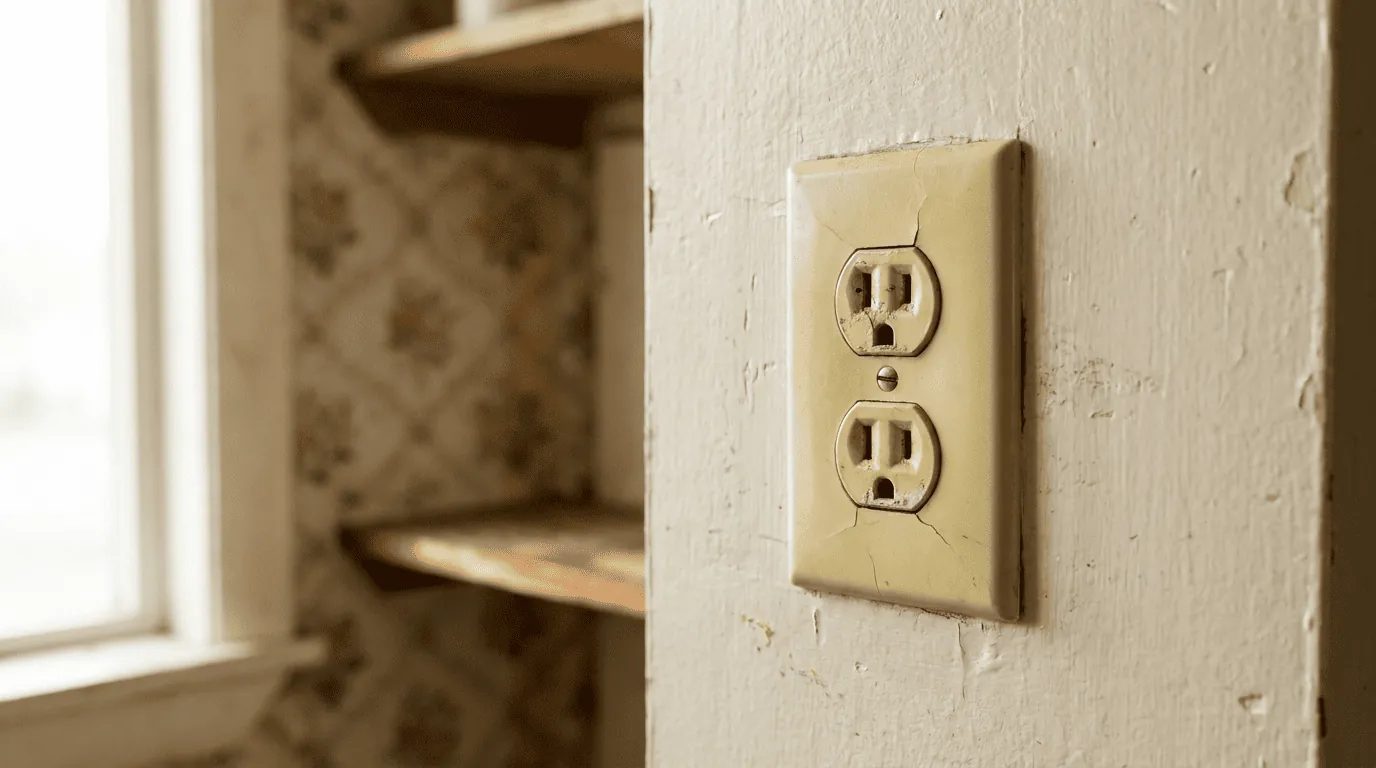
That means the Anchorage-specific issues are less about knob-and-tube wiring and more about homes from the 1960s–1980s: two-prong ungrounded outlets in some older houses, too few kitchen and bathroom circuits, earlier panel brands, and decades of additions and handyman changes. Some homes from the late 1960s and early 1970s nationally were built with aluminum branch-circuit wiring; if you suspect this, have an electrician evaluate it — it can be made safe with approved repair methods.
If you live in one of the older neighborhoods, see the Downtown & South Addition guide.
What to expect during the work
- A walkthrough to agree on scope, followed by a written estimate.
- Openings in drywall or ceilings to route new cable — ask whether patching is included.
- A rough-in inspection before walls are closed and a final inspection after devices are installed, where a permit is required.
- Updated panel directory labeling for any new or changed circuits.
Permits
In the Anchorage Bowl new circuits generally need an electrical permit and inspection under the 2026 code update (2023 NEC with local amendments). Details: Anchorage permits guide.
Questions to ask
- Which parts of the work require a permit, and will you obtain it?
- Will new work require GFCI or AFCI protection, and how does that affect cost?
- Is there enough panel space and service capacity?
- Who patches drywall and paints after the work?
- If you find unsafe conditions elsewhere, how will you handle it?
Frequently asked questions
How much does it cost to rewire a house in Anchorage?
Full rewiring is priced on the size of the home, how many circuits are replaced, access to walls and ceilings (finished basements and vaulted ceilings are harder), the drywall repair and painting included, and whether the panel or service must be upgraded at the same time. Partial rewiring of specific circuits or rooms is far more common and much less expensive.
We do not publish prices. Ask for a written scope that lists circuits, devices, patching responsibility and permits.
Does finishing a basement require an electrical permit?
New circuits, receptacles and lighting in a finished space are typically permitted work inside the Building Safety Service Area. Inspectors usually look at the rough-in wiring before insulation and drywall go up, then at the finished devices. New work must meet the adopted code, which commonly means arc-fault and ground-fault protection in the right locations, tamper-resistant receptacles and spacing rules.
Anchorage adopts the National Electrical Code with local amendments and has historically modified some arc-fault requirements, so ask your electrician which rules apply to your project.
How do I know if my home has aluminum wiring, and is it dangerous?
Some homes built nationally in the late 1960s and early 1970s used aluminum branch-circuit wiring. Cable jackets are sometimes printed with “AL” or “Aluminum,” and the conductors look silver rather than copper. Aluminum branch wiring can be associated with overheating at connections when it is joined to devices not rated for it.
Do not open energized boxes to check. Ask an electrician or home inspector. Where aluminum wiring is present, approved repair methods exist — such as listed connectors that join copper pigtails to the aluminum conductors — and full replacement is not always required.
Can I add outlets to an existing circuit?
Sometimes. It depends on how much load the circuit already carries, what kind of room it serves (kitchens, bathrooms and laundry areas have dedicated-circuit rules), and whether the new outlets can meet current code requirements such as GFCI or AFCI protection. In older homes, an existing circuit may already serve several rooms.
An electrician can measure the load and tell you whether extending the circuit or running a new one is safer. For space heaters, workshop tools or block-heater outlets, a new dedicated circuit is usually the better choice.
Sources (4)
- Alaska Department of Labor — Alaska Economic Trends, housing article (2015) (opens in a new tab)
- Municipality of Anchorage — Historic Preservation Plan for Anchorage’s Four Original Neighborhoods (public review draft, 2012) (opens in a new tab)
- Anchorage Municipal Code Chapter 23.30 — Local Amendments to the National Electrical Code (opens in a new tab)
- Municipality of Anchorage — press release on the 2026 building code update (AO 2026-33) (opens in a new tab)