
At a glance
- Community councils
- Downtown; South Addition
- ZIP code (reported)
- 99501 covers the downtown core and South Addition — verify by address with USPS
- Electric utility
- Chugach Electric (downtown is in the former ML&P “North District”)
- Housing
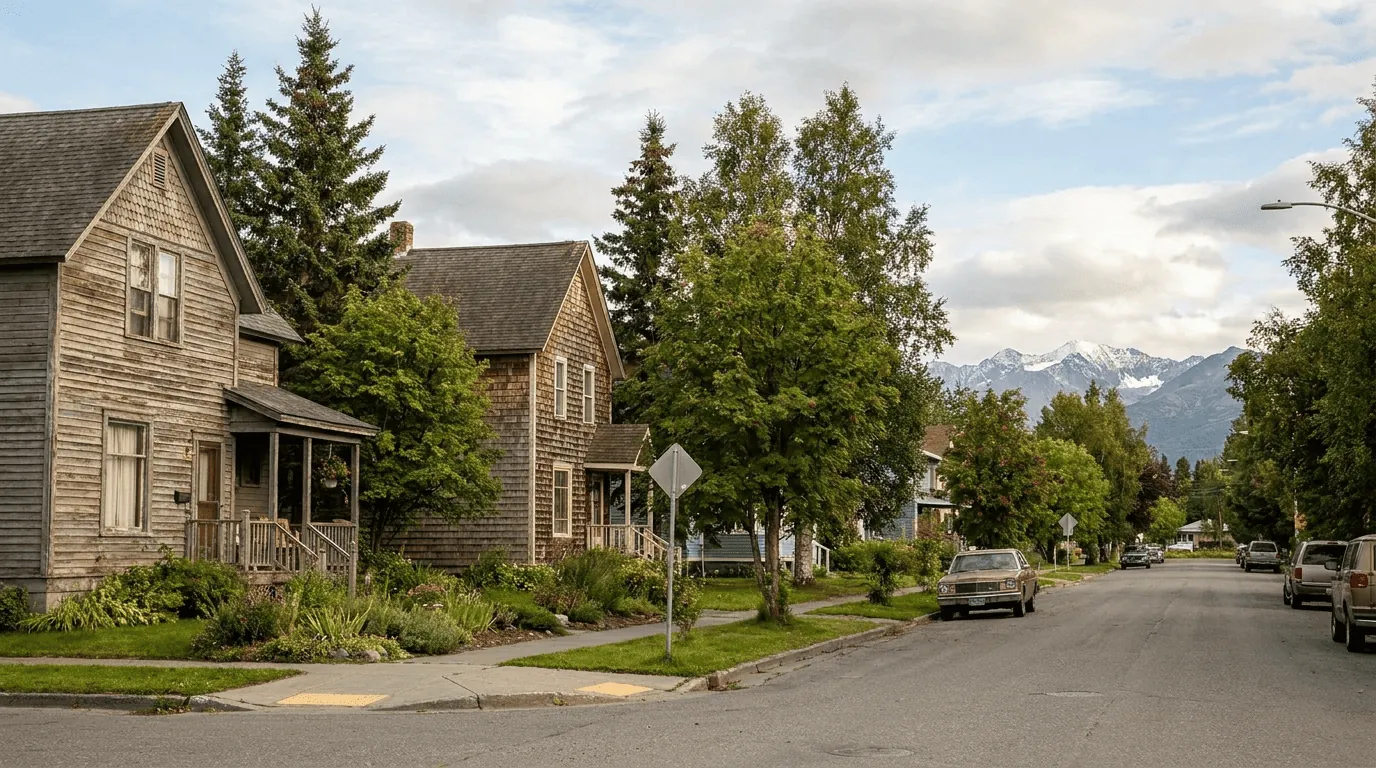
- Older single-family homes, small multi-family, downtown condos and apartments
Where these neighborhoods are
Downtown occupies the original townsite on the bluff above Ship Creek and Knik Arm. The South Addition lies immediately south: descriptions commonly place it between the Delaney Park Strip on the north and Chester Creek and Westchester Lagoon on the south, with Cook Inlet and Bootleggers Cove to the west. Exact edges vary by source, and the Municipality’s community council maps are the reference for council boundaries.
The Municipality’s historic preservation planning treats Downtown, the South Addition, Government Hill and Fairview as Anchorage’s four original neighborhoods. The Park Strip itself served as an early airfield.
What the housing is like
The South Addition’s residential build-out began in the late 1930s and accelerated with wartime demand in the 1940s; neighborhood profiles describe most homes as built between about 1940 and 1969. The 1964 earthquake damaged parts of the area. The result is a mix of original wood-frame houses, rebuilt and heavily remodeled homes, and later infill and small apartment buildings.
Downtown is mostly commercial, with condominiums, apartments and a smaller number of houses on its edges. For condo and apartment residents, the building’s association or owner usually controls the service equipment and anything outside your unit.
Electrical topics that come up here
Renovating older houses
A house built in the 1940s or 1950s has typically been rewired in pieces over the decades. Common findings during remodels include ungrounded two-prong outlets, too few kitchen and bathroom circuits, older panels, and undocumented additions. Planning the electrical scope early avoids surprises after walls are open. See wiring and rewiring.
Panel capacity for modern loads
Older services may be 100 amps or less. Adding a heat pump, electric range, or EV charger calls for a load calculation and sometimes a service upgrade. Tight lots and older overhead service drops can affect where new service equipment can go.
Condos and multi-unit buildings
If you own a condo, check your association’s rules before hiring anyone. Work on common areas, building feeders and shared meters usually needs association approval, and EV charging in shared garages often involves the association’s own electrical plan.
Exterior lighting
Many homes here have narrow side yards and alley access. Well-aimed, shielded exterior lighting improves safety without lighting up neighbors’ windows.
ZIP code notes
Third-party ZIP directories and neighborhood profiles place Downtown and the South Addition in ZIP 99501, which also covers Government Hill and parts of Fairview. We could not verify ZIP boundaries directly with USPS during our research, and ZIP codes do not match neighborhood boundaries exactly. Use the USPS ZIP lookup for a specific address.
Permits in this area
Downtown and the South Addition are inside the Anchorage Bowl, where municipal permits and inspections apply. If a property is historic or in a special zoning district, exterior changes such as new service masts or meter locations may raise additional questions — ask Development Services early. See the permits guide.
Frequently asked questions
My South Addition house still has two-prong outlets. What are my options?
Existing ungrounded two-prong outlets are not automatically a code violation, but replacing them with three-prong outlets requires one of the code-approved methods. Options typically include installing a GFCI receptacle or GFCI breaker and labeling the outlets “No equipment ground,” or adding an equipment grounding conductor back to the panel.
For computers, home offices and sensitive electronics, a true ground is usually preferable. An electrician can tell you which approach suits each room and whether a broader rewiring makes more sense during a renovation.
Can I install an EV charger in my condo’s parking garage?
Usually only with association approval, because the building’s electrical service, feeders and parking areas are shared. Ask the association whether it has an EV charging policy, how much spare capacity the building has, and how electricity use will be metered and billed. Some buildings plan shared charging rather than individual installations.
Does the historic character of the neighborhood limit electrical work?
Interior electrical work is governed by the building and electrical codes. Exterior changes — a new service mast, moving the meter or adding visible conduit on a street-facing wall — can raise zoning or design questions in some locations. Ask Development Services early if your project changes visible service equipment.
What should I plan for electrically when renovating an older home here?
Budget time for discovery: decades of partial rewiring are common in houses from the 1940s–1960s. Have an electrician assess the panel, service size and existing circuits before design is final, plan dedicated kitchen and bathroom circuits to current code, and decide early whether to add capacity for future heat pumps or EV charging.
Sources (6)
- Municipality of Anchorage — Historic Preservation Plan for Anchorage’s Four Original Neighborhoods (public review draft, 2012) (opens in a new tab)
- Chugach Electric — North District (former ML&P service area) (opens in a new tab)
- Federation of Community Councils (Anchorage) (opens in a new tab)
- Anchorage Daily News — Updated community council boundaries finalized (January 2026) (opens in a new tab)
- Municipality of Anchorage Planning — Maps (opens in a new tab)
- USPS ZIP Code lookup (opens in a new tab)