
At a glance
- Community councils
- Several, including Hillside, Bear Valley and Rabbit Creek areas
- ZIP codes (reported)
- 99516 covers much of the Hillside; lower portions fall in other ZIPs such as 99507
- Electric utility
- Chugach Electric
- Water
- Nearly 7,000 southeast Anchorage lots lack municipal water and sewer (AWWU)
Where the Hillside is
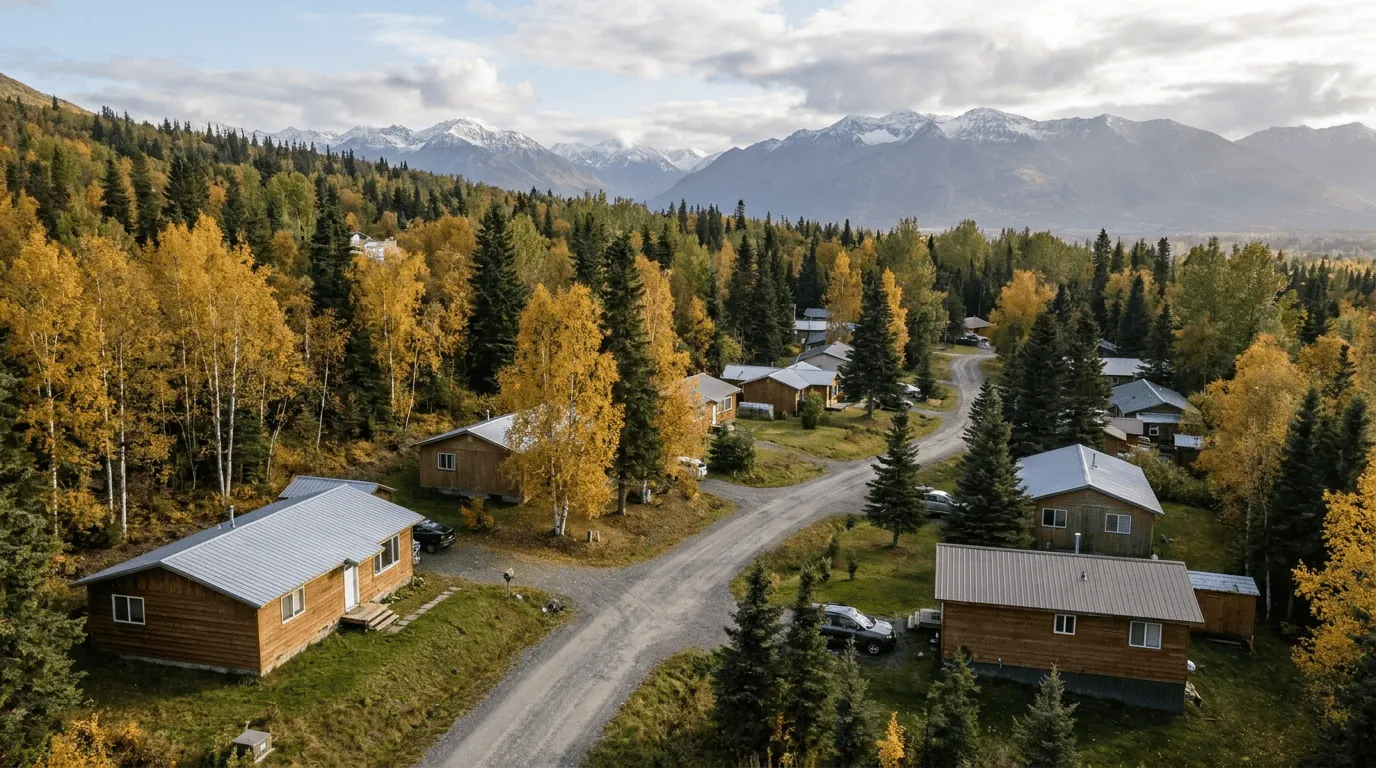
“The Hillside” is an informal name for the residential slopes between the Anchorage Bowl and Chugach State Park, generally the higher ground on the city’s east and southeast side, extending south toward the Rabbit Creek area. It is not a single community council; several councils cover different parts of it, and their boundaries were updated in January 2026. The Municipality’s Hillside District Plan, adopted in 2010, is the main planning document for the area.
Wind and outages
Strong winds descending from the Chugach Mountains are a known Hillside hazard. Outage reports from several storms — including October 2022 and the January 2025 windstorm, when Chugach’s outage count peaked around 17,500 members — singled out the Hillside and East Anchorage among the hardest-hit areas. During the January 2025 restoration, news coverage described Hillside residents running generators to keep homes warm.
Many Hillside streets are served by overhead lines running through spruce and birch, which are vulnerable to falling trees and limbs. Restoration in these areas can take longer than on main feeders.
View as table
| Item | Peak without power | Note |
|---|---|---|
| April 2018 | ~7,600 | Chugach outage map peak |
| February 2024 | ~5,900 | Peak, Chugach members |
| January 2025 | ~17,500 | Peak, Chugach members; gusts above 100 mph |
Sources: Anchorage Daily News — 2025, 2024, 2018. Utility-reported peaks; not strictly comparable.
Wells, septic and why they matter for power
According to AWWU, nearly 7,000 residential lots in southeast Anchorage are outside municipal water and sewer service, most of them larger than an acre and served by on-site wells and septic systems. The Hillside District Plan set a fixed boundary for future municipal water and sewer extension.
For electrical planning, a private well means no water during an outage unless the well pump has backup power. Well pumps have high starting current, so they need to be part of the generator sizing calculation. Some homes also have pressure tanks, treatment equipment, or heat trace on water lines that need power to keep working.
Other electrical topics on the Hillside
Long driveways and outbuildings
Detached garages, shops and long driveways often mean feeders to outbuildings, buried cable and driveway lighting. Underground work needs correct burial depth and utility locates before digging.
Heat trace and snow
Higher elevation and wind-driven drifting make roof and gutter heat cable and pipe heat trace common. These circuits need ground-fault protection and are good candidates for generator backup.
Surge and restoration events
Frequent outages and restorations are a reasonable argument for panel-level surge protection alongside point-of-use protectors.
ZIP code notes
Third-party sources place much of the Hillside — including Glen Alps, Bear Valley and Rabbit Creek areas — in ZIP 99516, with some lower portions in other ZIP codes such as 99507. We could not verify these assignments directly with USPS. Use the USPS ZIP lookup for a specific address.
Permits in this area
The Hillside is within the Anchorage Bowl, where municipal electrical permits and inspections generally apply. Generator installations may also involve gas or propane permits. See the permits guide.
Frequently asked questions
Will my well work during a power outage?
Not unless the well pump has backup power. A pressure tank holds a small amount of usable water, but once it is drawn down the pump must run. AWWU reports that nearly 7,000 southeast Anchorage lots are outside municipal water and sewer service, so this applies to a large share of Hillside homes. Include the well pump in any generator plan.
What size generator does a Hillside home with a well need?
It depends on the pump horsepower, the heating system and the other loads you choose. A well pump’s starting current is often the deciding factor in sizing. Find the pump details on the well record or control box, and ask an installer for a load calculation rather than relying on rules of thumb.
Why does the Hillside lose power more often in windstorms?
Strong downslope winds from the Chugach Mountains hit the Hillside and East Anchorage hard, and many Hillside streets are fed by overhead lines through spruce and birch, which are vulnerable to falling trees and limbs. News coverage of the 2018, 2022 and January 2025 storms singled out these areas among the last restored.
Should I report trees near my power line?
Yes. Contact Chugach Electric about trees near overhead distribution lines. Do not trim near energized lines yourself, and keep at least the utility-recommended distance from any downed line.
Sources (9)
- AWWU — Water and sewer service on Anchorage’s Hillside (opens in a new tab)
- Alaska’s News Source — High winds bring outages to South Anchorage and Hillside (October 2022) (opens in a new tab)
- Anchorage Daily News — Power outages extend to third day after January 2025 storm (opens in a new tab)
- Alaska Public Media — Anchorage cleans up after January 2025 winds (opens in a new tab)
- Anchorage Daily News — Winds up to 80 mph knock out power (February 2024) (opens in a new tab)
- Federation of Community Councils (Anchorage) (opens in a new tab)
- Anchorage Daily News — Updated community council boundaries finalized (January 2026) (opens in a new tab)
- Municipality of Anchorage Planning — Maps (opens in a new tab)
- USPS ZIP Code lookup (opens in a new tab)