
What heat cable does — and does not do
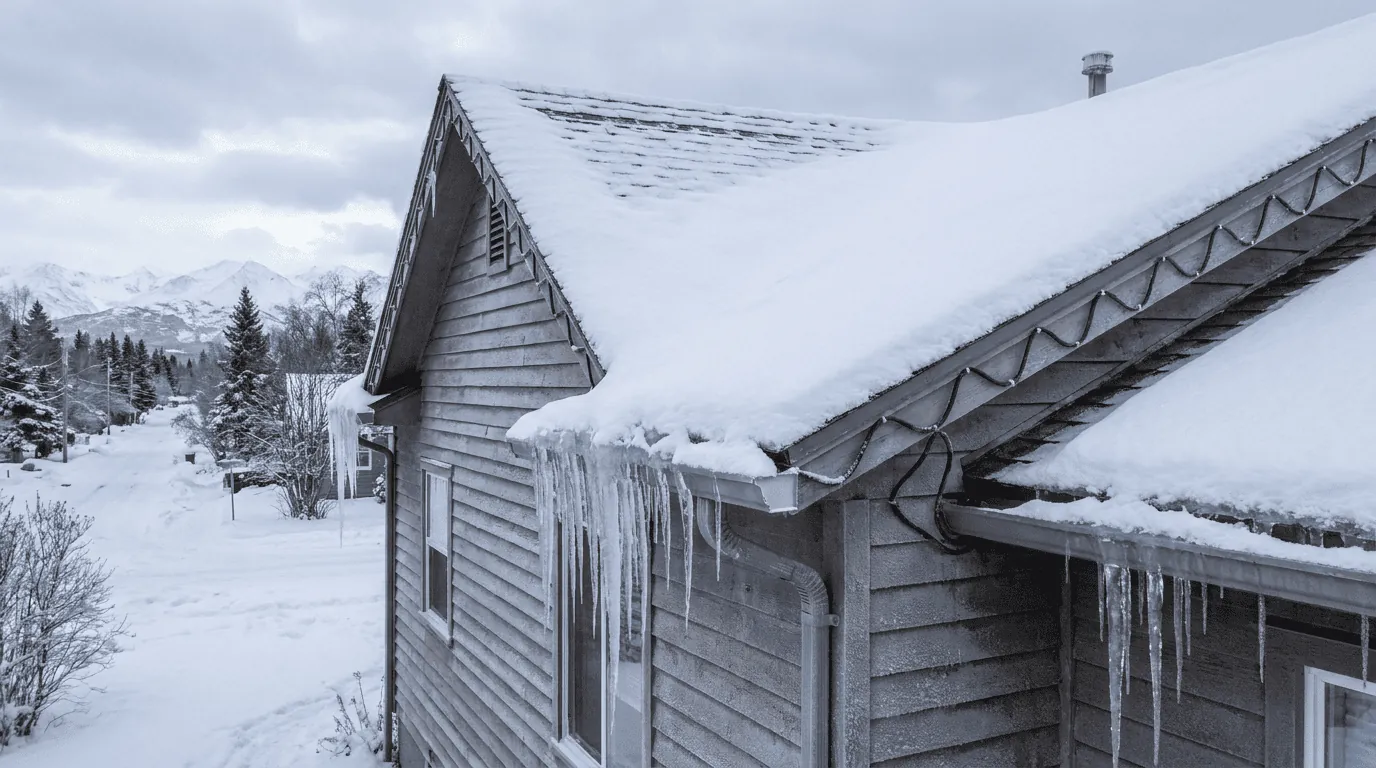
Roof and gutter heat cable keeps a channel open so meltwater can drain off the roof edge, through gutters and down the downspouts instead of refreezing into an ice dam. It is not designed to clear all snow and ice from a roof.
Ice dams usually start with heat escaping into the attic and melting snow higher on the roof. Air sealing, attic insulation and ventilation address that cause; heat cable treats the symptom. On many homes the best result comes from doing both.
Why it comes up so often in Anchorage
Anchorage’s winters mix extended cold with warm, sometimes rainy storms. The January 2025 windstorm, for example, arrived with unusually warm temperatures and rain before freezing again — the kind of swing that turns roof snow into ice at the eaves. Average annual snowfall at the airport is around 75 inches, and higher-elevation neighborhoods can see more.
Types of cable
| Type | How it works | Considerations |
|---|---|---|
| Self-regulating | Output adjusts with temperature along its length | Most common for roofs and gutters; can be cut to length within limits |
| Constant-wattage | Fixed output per foot | Lower cost; must not overlap; more sensitive to installation errors |
| Plug-in kits | Pre-terminated cord-and-plug sets | Simple, but limited length and controls |
Product rules matter: some cables are not suitable for certain roofing materials or flat roofs. Use cable listed for roof and gutter de-icing and follow the manufacturer’s layout instructions.
Electrical requirements
- Ground-fault protection: the NEC requires ground-fault protection of equipment for fixed outdoor de-icing and snow-melting equipment (Article 426). This is a fire-safety measure, not optional.
- Dedicated circuits: long runs of cable add up. A larger system may need one or more dedicated circuits sized to the cable’s start-up and running load.
- Weatherproof connections: listed connection, splice and end-seal kits; no tape-wrapped splices.
- Controls: a simple switch or timer, or an automatic controller with temperature and moisture sensing so the cable runs only when it is useful.
In the Anchorage Bowl new circuits generally need an electrical permit and inspection under the 2026 code update (2023 NEC with local amendments). Details: Anchorage permits guide.
Running costs and controls
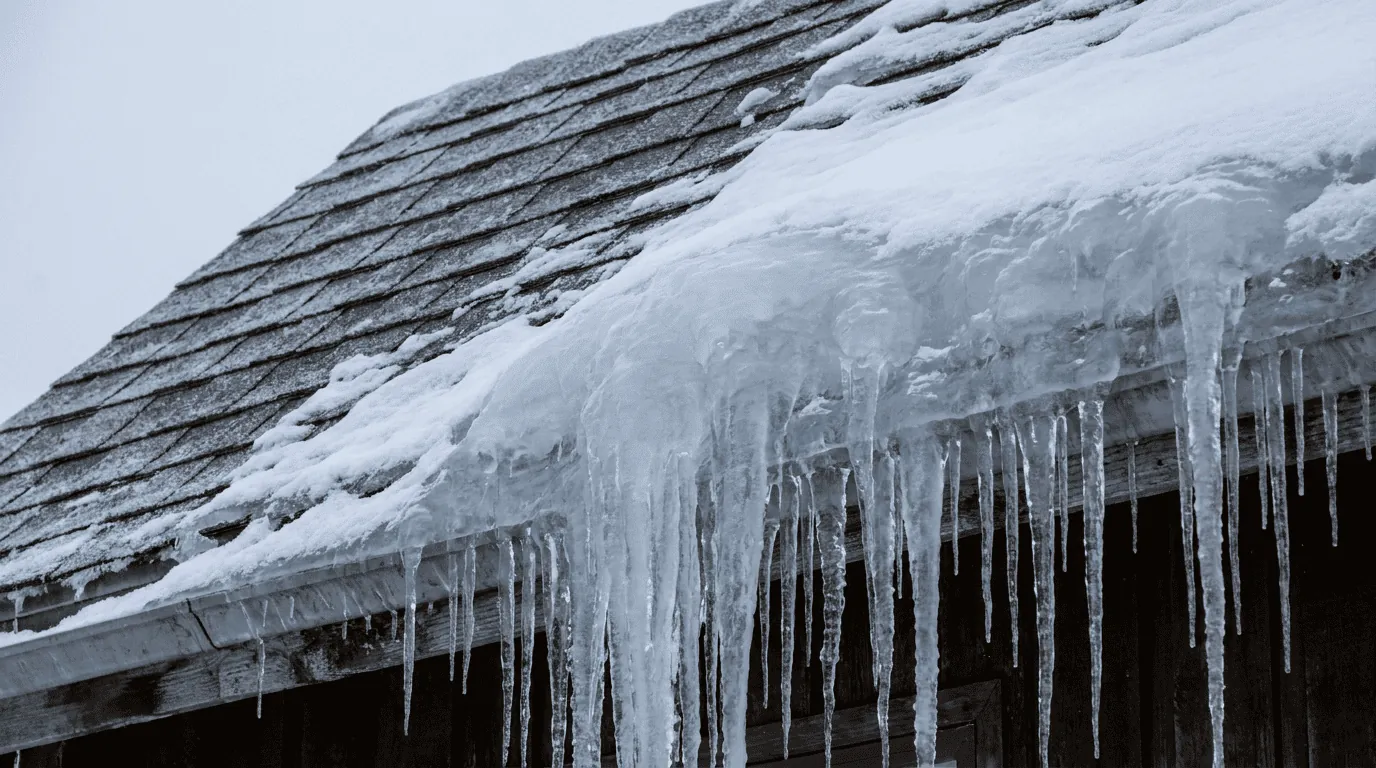
Heat cable can draw a meaningful amount of electricity when left on continuously through a long winter. Controllers that sense temperature and moisture, or at least a timer and a clear on/off routine, help keep costs down. Ask your installer to estimate the connected load in watts so you can compare against your electric rate.
Pipe heat trace is a related but different job
Heat trace is also used on water lines, well lines and drain lines that are at risk of freezing. Pipe heat trace has its own product types and installation rules. If a plumbing line keeps freezing, have both the plumbing and insulation looked at — and consider whether that circuit should be on a generator if you have one.
Questions to ask an installer
- What is causing my ice dams, and would air sealing or insulation help?
- Which cable type and layout do you recommend for my roof material?
- How will the circuit be ground-fault protected, and is a new circuit needed?
- What controls do you recommend to limit energy use?
- Does this work require a permit, and will you obtain it?
- How is the cable secured so snow sliding off the roof will not tear it loose?
Frequently asked questions
How much does roof heat cable installation cost in Anchorage?
Installed cost depends on the length of eaves, valleys, gutters and downspouts to be protected, the cable type (self-regulating cable costs more than constant-wattage cable), the roofing material and clip system, roof height and access, whether a new dedicated circuit with ground-fault protection is needed, and the controls you choose — a simple switch, a timer, or an automatic temperature-and-moisture controller.
We do not publish prices. Ask installers for a layout drawing with cable lengths, the connected load in watts, and the circuit work included.
How much electricity does heat tape use?
Roof and gutter cable is rated in watts per foot, and products commonly fall in the range of about 5 to 8 watts per foot at freezing temperatures. Multiply the total installed length by the rating to estimate the connected load: 200 feet at 6 watts per foot is about 1.2 kilowatts, or 1.2 kWh for every hour it runs. Left on continuously through a long winter, that adds up.
Self-regulating cable reduces output as it warms, and an automatic controller that runs the system only when it is near freezing and moisture is present can cut running time substantially. Compare the estimated kilowatt-hours against your Chugach Electric or MEA rate to budget operating cost.
Will heat cable stop ice dams completely?
No. Heat cable keeps a channel open so meltwater can drain off the roof edge and through gutters and downspouts instead of refreezing. It does not keep the whole roof clear. Ice dams usually begin when heat escaping into the attic melts snow higher on the roof; the water then refreezes at the colder eaves.
Air sealing the ceiling, adding attic insulation and improving ventilation address that cause. On many Anchorage homes the best result combines both: fix the heat loss where practical and use heat cable at problem eaves, valleys and downspouts. A qualified energy auditor or roofer can help with the building side.
Can I install plug-in heat tape myself?
Listed plug-in roof and gutter kits exist for small areas, and homeowners do install them. Follow the instructions exactly: use only cable listed for roof and gutter de-icing, plug it only into a GFCI-protected outdoor receptacle, never overlap constant-wattage cable, use the specified clips, and check roofing-material restrictions.
Larger systems — long eaves, multiple circuits, hardwired controllers — should be designed and installed by a qualified electrician. The National Electrical Code requires ground-fault protection of equipment for fixed outdoor de-icing systems, and new circuits generally need a permit inside the Building Safety Service Area.
Sources (5)
- NOAA NCEI — U.S. Climate Normals (1991–2020), Anchorage Ted Stevens Intl. Airport station (opens in a new tab)
- Anchorage Daily News — Power outages extend to third day after January 2025 storm (opens in a new tab)
- NFPA 70, National Electrical Code (free read-only access) (opens in a new tab)
- Municipality of Anchorage — press release on the 2026 building code update (AO 2026-33) (opens in a new tab)
- Anchorage Municipal Code Chapter 23.30 — Local Amendments to the National Electrical Code (opens in a new tab)