
Panel replacement vs. service upgrade
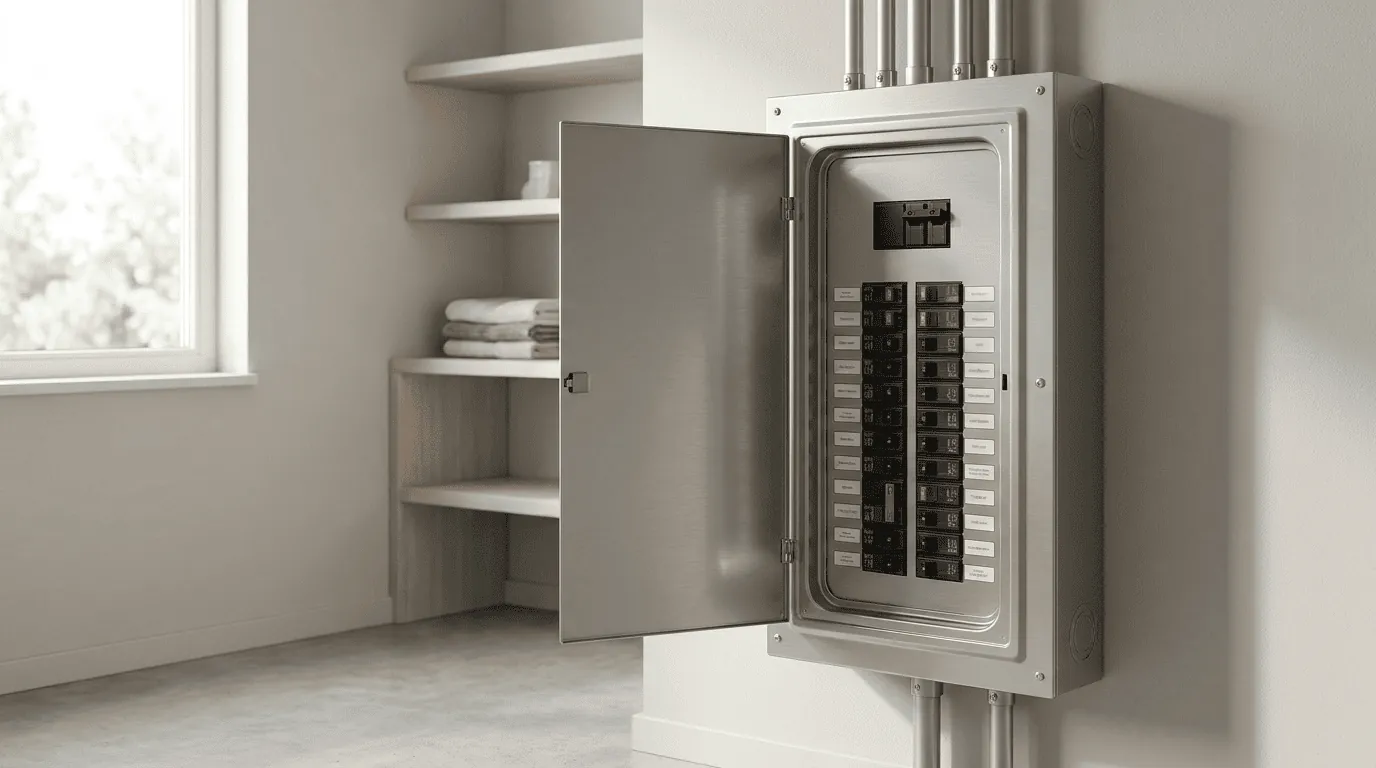
These terms get used interchangeably, but they are different jobs. A panel replacement swaps the breaker panel (load center) for a new one, usually at the same amperage. A service upgrade increases the capacity of the whole service — commonly from 100 or 150 amps to 200 amps — which can involve the meter base, service entrance conductors, grounding and bonding, and coordination with the electric utility.
Your installer should tell you which one your project actually needs, and why.
| Aspect | Panel replacement | Service upgrade |
|---|---|---|
| What changes | Breaker panel (load center) | Panel plus meter base, service conductors, grounding |
| Typical trigger | Old, damaged or full panel | Calculated load exceeds existing service |
| Utility involvement | Usually a brief disconnect | Coordination with Chugach or MEA |
| Permit and inspection | Yes, inside the BSSA | Yes, inside the BSSA |
Common reasons Anchorage homeowners upgrade
- New loads: a Level 2 EV charger, heat pump, electric range, hot tub, or shop equipment that pushes the calculated load past what the service can carry.
- Backup power: preparing for a generator and transfer switch, which may need breaker space or a service-rated switch.
- No space: a full panel with stacked tandem breakers or no room for required protection devices.
- Age and condition: corrosion, overheating marks, or breakers that no longer trip reliably.
- Discontinued equipment: some older panel brands are no longer manufactured and replacement breakers are hard to source; certain legacy brands have also been the subject of safety concerns. An electrician can assess the specific equipment in your home.
- Renovations and sales: remodels, additions, or home-inspection findings.
Signs it is time to have the panel evaluated
- Breakers that trip often under normal use, or that will not reset.
- Warmth, buzzing, or a burning smell at the panel.
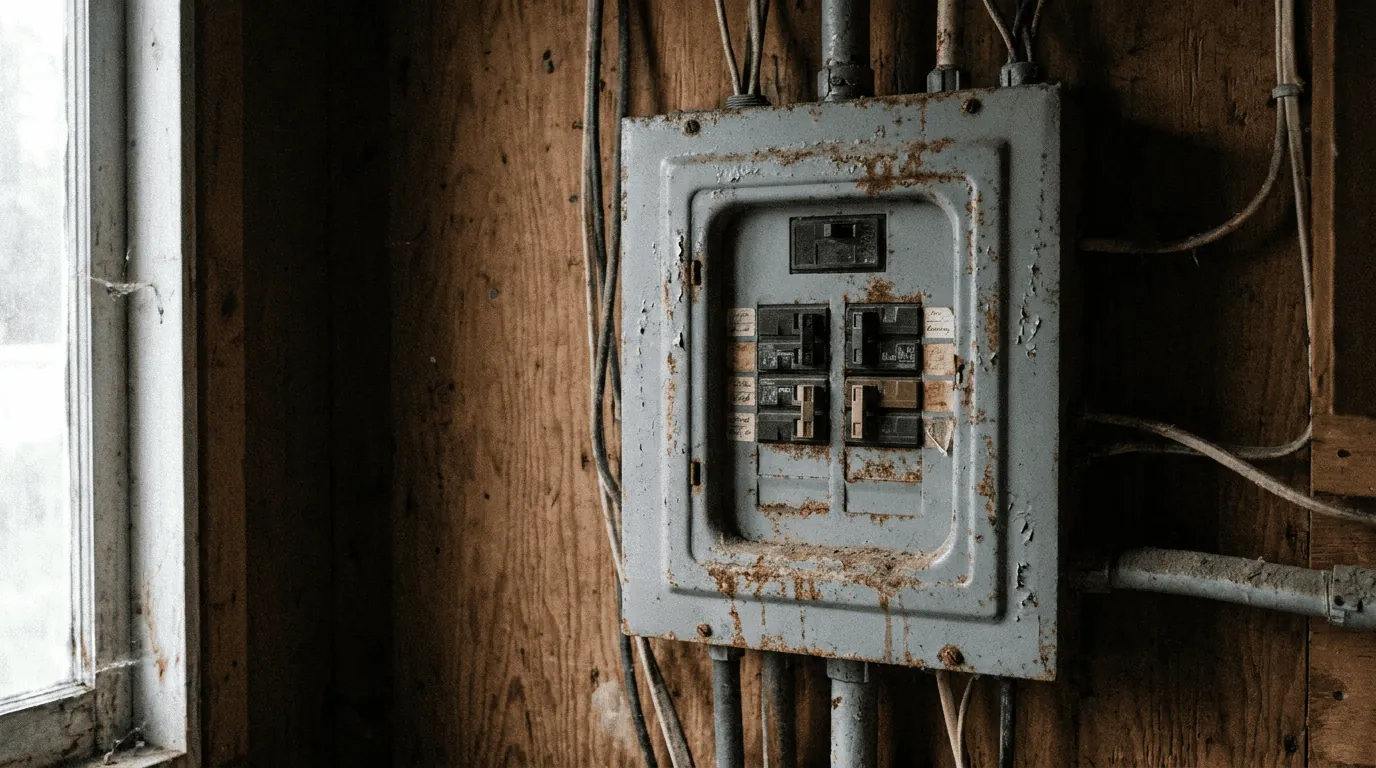
- Visible rust or water staining inside the panel — snowmelt and condensation can be culprits in garages and exterior walls.
- Lights that dim noticeably when large appliances start.
- Extension cords or power strips used as permanent wiring because there are not enough circuits.
Load calculations and planning ahead
A proper upgrade starts with a load calculation under the National Electrical Code, which estimates the home’s demand based on square footage, appliances, heating and cooling equipment and anything you plan to add. It is the best way to learn whether you need more amps, or whether load-management equipment (for example, a device that pauses an EV charger while the range is in use) could avoid a service upgrade altogether.
If you are thinking about a generator, an EV, a heat pump, or a hot tub within the next few years, say so up front. Planning everything at once usually costs less than upgrading twice.
Utility coordination
Service upgrades require coordination with your electric utility for disconnection, reconnection and metering. Most of Anchorage is served by Chugach Electric — including the former Municipal Light & Power area, now Chugach’s North District — while Matanuska Electric Association serves Eagle River, Chugiak and nearby areas. Your contractor typically handles this, but scheduling depends on the utility.
Surge protection and other current code items
The 2020 and 2023 editions of the National Electrical Code require a surge-protective device when a dwelling unit’s service is installed or replaced, and an emergency disconnect at a readily accessible outdoor location for one- and two-family dwellings. Anchorage adopts the NEC with local amendments, so confirm with your installer how these provisions apply to your job. See whole-home surge protection for more on surge devices.
In the Anchorage Bowl this work generally needs an electrical permit and inspection under the 2026 code update (2023 NEC with local amendments). Eagle River and Chugiak have historically been handled differently — confirm for your address. Details: Anchorage permits guide.
Questions to ask an electrician
- Do I need a new panel, a larger service, or both? What does the load calculation show?
- Will the meter base, service conductors or grounding change?
- Who coordinates with Chugach or MEA, and how long will power be off?
- Will the new panel have room for a generator connection and future circuits?
- Is a surge-protective device included, and which type?
- Will drywall, siding or trim need repair afterward, and is that included?
Frequently asked questions
How much does an electrical panel upgrade cost in Anchorage?
Cost depends mainly on which job you actually need. A like-for-like panel replacement at the same amperage is the smaller project. A service upgrade — for example from 100 to 200 amps — may also replace the meter base, service-entrance conductors and grounding, and requires coordination with Chugach Electric or Matanuska Electric Association. Other factors: the panel location and wall access, whether drywall or siding must be opened and repaired, surge protection and emergency-disconnect requirements under the current code, and permit fees.
We do not quote prices, but we recommend asking each contractor for the load calculation behind their recommendation so you can see whether a full service upgrade is really necessary.
Is 100-amp service enough for an Anchorage home?
Sometimes. Many Anchorage homes heat with natural gas, so the biggest electrical loads are often the range, dryer and water heater rather than the heating system. A modest gas-heated home without an electric range, EV charger or electric water heater may operate comfortably on 100 amps.
Adding a heat pump, a Level 2 EV charger, a hot tub, a shop, or a generator with whole-home transfer changes the picture. The only reliable answer is a load calculation under the National Electrical Code for your actual home and planned additions. Sometimes a load-management device — for example, one that pauses EV charging while the range is on — avoids a service upgrade entirely.
How long is the power off during a panel replacement, and what about winter?
A straightforward panel swap typically keeps the power off for most of a working day; a full service upgrade can take longer because the utility must disconnect and reconnect the service and the work may need inspection before reconnection. Scheduling depends partly on utility availability.
In winter, ask the contractor how they will protect the home while power is off: furnace and boiler controls will not run, heat trace on water lines will be off, and a well pump will not supply water. Some homeowners schedule service work during milder weather or arrange temporary heat. If you already own a generator, ask whether it can safely carry essential loads during the changeover.
Do I need a panel upgrade to add an EV charger or heat pump?
Not always. A Level 2 EV charger is a continuous load, and a heat pump can be a large one, so both require a load calculation. If there is spare capacity and panel space, a new dedicated circuit may be all you need. If capacity is tight, options include setting the charger to a lower current, installing a listed energy-management system, or upgrading the service. See our EV charger page for the charging side of the decision.
What signs mean my panel should be inspected soon?
- Breakers that trip often under normal use or will not reset.
- Warmth, buzzing, crackling or a burning smell at the panel.
- Rust or water staining inside the panel — snowmelt and condensation are common culprits in garages and on exterior walls.
- Lights dimming noticeably when large appliances start.
- Extension cords and power strips used as permanent wiring because there are not enough circuits.
If you see scorching or smell burning, do not open the panel cover; call a qualified electrician, and call 911 if there is smoke or fire.
Sources (6)
- Alaska Department of Labor — Alaska Economic Trends, housing article (2015) (opens in a new tab)
- Municipality of Anchorage — press release on the 2026 building code update (AO 2026-33) (opens in a new tab)
- Anchorage Municipal Code Chapter 23.30 — Local Amendments to the National Electrical Code (opens in a new tab)
- Chugach Electric — North District (former ML&P service area) (opens in a new tab)
- Municipality of Anchorage — Resident utilities (opens in a new tab)
- NFPA 70, National Electrical Code (free read-only access) (opens in a new tab)