
Safe checks you can do first
- Check whether it is just you. If neighbors are also dark, check your utility’s outage map (Chugach Electric or Matanuska Electric Association) before calling anyone.
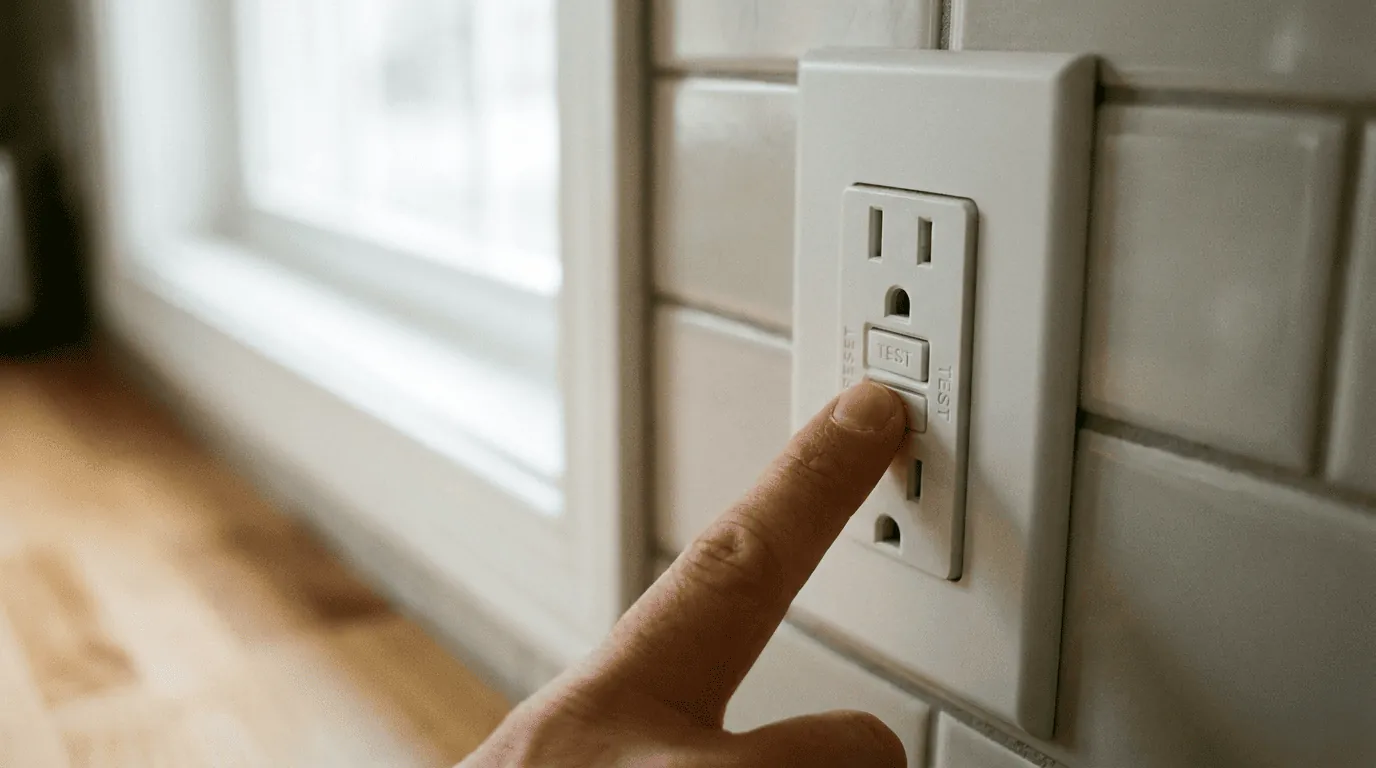
- Reset GFCI outlets. Outdoor, garage, bathroom and kitchen outlets are often protected by a GFCI device elsewhere on the circuit. Press “Reset” firmly on each one you can find.
- Look for a tripped breaker. A tripped breaker sits between on and off. Switch it fully off, then on. If it trips again right away, leave it off and call an electrician.
- Unplug and retest. If a breaker trips when a particular appliance runs, the appliance — not the wiring — may be at fault.
- Swap the bulb. Flicker in a single fixture is often a loose or failing bulb, or an incompatible LED with a dimmer.
Do not remove panel covers, outlet covers or fixtures to investigate further unless you are qualified to work on electrical systems.
Symptoms at a glance
| Symptom | Common cause | What to do |
|---|---|---|
| Breaker trips when heaters or block heaters run | Overloaded circuit | Move loads to other circuits; ask about a dedicated circuit |
| Breaker trips immediately on reset | Short circuit or ground fault | Leave it off and call an electrician |
| Outdoor outlet dead after snowmelt | GFCI tripped by moisture | Reset once; if it repeats, have it checked |
| Lights flicker across many rooms | Loose connection in panel, meter base or service | Call an electrician; may involve the utility |
| Half the house dark after an outage | Lost leg or neutral on the service | Turn off electronics; call utility and electrician |
| Outlet warm or discolored | Loose or overheating connection | Stop using it; call an electrician promptly |
Common problems and what they can mean
Breakers that trip repeatedly
An overloaded circuit is the most common cause — space heaters, block heaters and holiday lighting during the dark months add up quickly. Repeated trips can also indicate a short circuit, a ground fault, or an arc-fault condition detected by an AFCI breaker. A breaker that trips is doing its job; replacing it with a larger one is never the fix.
Outdoor outlets that stop working in winter
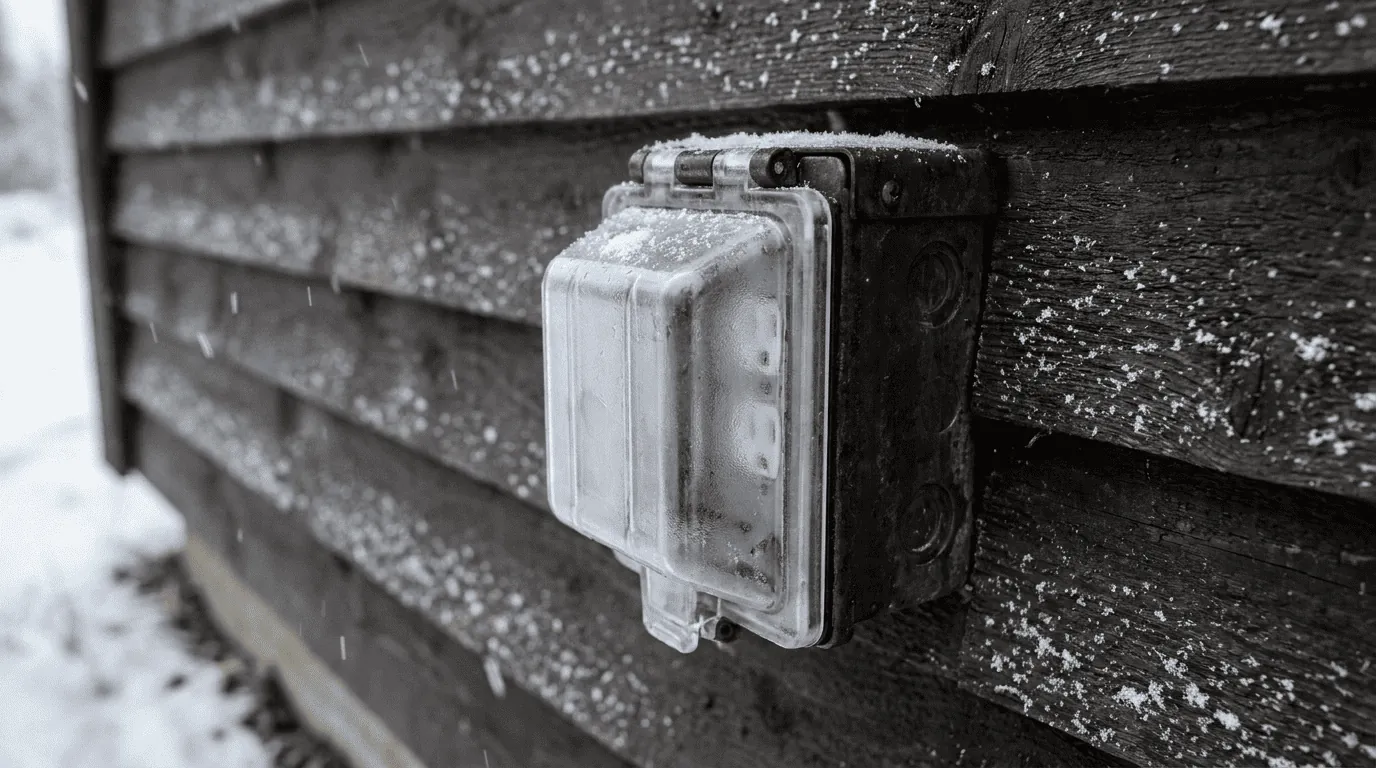
Exterior outlets used for engine block heaters, heat tape and holiday lights are exposed to snow, ice and meltwater. Moisture can trip GFCI protection, and damaged weatherproof covers or cracked receptacles are common after a hard winter. Repeated GFCI trips outdoors should be checked rather than bypassed.
Flickering or dimming lights
Brief dimming when a large motor starts can be normal. Flicker across many rooms, lights that get brighter and dimmer, or problems after a storm can point to a loose connection in the panel, meter base or service — something an electrician and sometimes the utility need to look at.
Dead outlets
Often a tripped GFCI upstream, a switched outlet, or a loose connection at a backstabbed receptacle. A loose connection can heat up, so a dead outlet that is warm or discolored needs prompt attention.
Partial power after an outage
If half the house works and half does not, or lights behave strangely, you may have lost one leg of the service or a neutral. Turn off sensitive electronics and contact your utility and an electrician.
What a troubleshooting visit involves
An electrician will usually ask when the problem started, what was running, and whether anything changed recently. They test circuits with meters, check connections at outlets, switches and the panel, and look for damaged insulation or overheated terminals. Intermittent problems can take time to find; it helps to keep a short log of when trips or flickers happen.
Small repairs — replacing a receptacle or switch, correcting a loose connection — are often done the same visit. Larger findings, such as damaged circuits or an aging panel, may become a separate project such as rewiring or a panel upgrade.
Questions to ask
- Are you registered with the State of Alaska as an electrical contractor and licensed to work in the Municipality?
- How do you charge for diagnostic time versus repairs?
- What did you find, and what are my options if the fix is larger than expected?
- Will this repair require a permit?
Frequently asked questions
Why do my breakers trip more in winter?
Winter adds loads that many circuits were never designed to carry together. Portable space heaters commonly draw around 1,500 watts each, engine block heaters several hundred to over a thousand watts, and holiday lighting, battery chargers and heat tape add more. Two heaters on one bedroom circuit, or two vehicles plugged into the same exterior circuit, can easily exceed a 15- or 20-amp breaker.
Try moving loads to different circuits. If a breaker trips immediately when reset, trips with very little running, or the outlet or cord feels warm, stop and have the circuit checked — that suggests a short, ground fault or failing connection rather than simple overload. A permanent fix may be a dedicated circuit for a heater or block-heater outlet.
Is it normal for an outdoor GFCI outlet to trip when snow melts?
It is common but not normal. Repeated trips during snowmelt or rain usually mean moisture is reaching the receptacle, the cord connection or the plugged-in device — for example a block-heater cord with a cracked plug or a weatherproof cover that no longer closes. GFCI protection is doing its job by cutting power when current leaks to ground.
Unplug everything, dry the connection, and reset. If it holds with nothing plugged in, test each device separately to find the faulty one. If it trips with nothing connected, or the cover is damaged, have the receptacle replaced with a weather-resistant GFCI and an in-use cover. Never replace a GFCI with a standard receptacle to stop the trips.
How much does an electrician charge for troubleshooting in Anchorage?
Contractors price diagnostic work differently — some charge a trip or service fee plus hourly time, others a flat diagnostic rate — and we do not publish local rates. Intermittent problems take longer to find, so it helps to write down when the problem happens, which circuits are affected, and what was running at the time.
When you request service, ask how diagnostic time and repairs are billed, and whether the diagnostic fee is credited toward the repair.
Can I just replace a breaker that keeps tripping?
Breakers rarely fail in a way that causes false trips. A breaker that trips is usually responding to a real overload, short circuit, ground fault or arc fault. Replacing it with a larger breaker is dangerous: the wire on that circuit is sized for the original rating and can overheat inside the wall long before a larger breaker would trip.
Work inside the panel also exposes you to parts that stay energized even with the main breaker off. Find the cause first — usually by redistributing loads or having the circuit tested — and leave breaker replacement to a qualified electrician.
What should I do if half the house loses power after a storm?
Partial power — some rooms dead, lights unusually bright or dim, appliances behaving strangely — can mean the home has lost one leg of its service or the neutral connection, often from storm damage to the service drop or a failing connection at the meter base. A lost neutral can expose electronics to damaging voltages.
Turn off or unplug sensitive electronics, check the utility’s outage map, and report the problem to Chugach Electric or Matanuska Electric Association. If the utility side checks out, have an electrician inspect the meter base and panel connections. Stay away from any downed or sagging lines.